


Many manufacturing enterprises keep facing frequent quality instability, short service life of mechanical components, high post-processing costs, and low assembly matching accuracy when purchasing customized metal structural parts. Most buyers only focus on surface dimensions and unit prices, ignoring core material performance, mold precision control, and internal structural defects of castings. These invisible hidden troubles directly lead to equipment downtime, frequent part replacement, increased maintenance costs, and delayed delivery cycles in actual production. Choosing reliable aluminum alloy die casting components can fundamentally avoid most long-term industrial risks that ordinary casting products cannot resolve.
Internal porosity, shrinkage cavities, and air holes are the most concealed quality defects in ordinary aluminum die castings. Such defects cannot be detected by simple appearance inspection, but they will cause air leakage, oil leakage, pressure resistance failure, and reduced structural strength after assembly and operation. Low-grade die casting processes cannot control the cooling uniformity of molten aluminum, resulting in uneven internal stress of finished parts. Long-term vibration and load operation will easily cause cracking, deformation and premature damage. Professional precision die casting production strictly follows standardized melting, pressure injection, cooling and trimming processes to eliminate internal microscopic defects from the source.
Enterprises often overlook the matching degree between material ratio and application working conditions. Ordinary aluminum casting materials have poor corrosion resistance, low wear resistance and weak high-temperature stability, which are not suitable for automotive accessories, intelligent equipment housings, electromechanical structural parts and precision mechanical assemblies. Professional aluminum die casting manufacturer adjusts alloy ratio according to different industry scenarios, optimizing hardness, toughness, heat resistance and corrosion resistance comprehensively. Custom material schemes greatly extend the service cycle of finished products and adapt to harsh working environments including humidity, vibration, high pressure and frequent operation.
Secondary machining accuracy deviation remains a common pain point affecting downstream assembly efficiency. Irregular wall thickness, large dimensional tolerance and unsmooth surface finish of conventional die castings require repeated polishing, turning and drilling processing. The whole process wastes labor hours, prolongs production cycles and increases comprehensive procurement cost invisibly. High-precision die casting technology achieves near-net shape forming, with extremely small dimensional tolerance, flat and smooth surface, and consistent wall thickness. It greatly reduces subsequent processing procedures, improves assembly fit accuracy and realizes mass stable batch supply.
Many buyers misunderstand that all die casting products have consistent compressive performance and sealing performance. In fact, casting density directly determines airtightness, pressure resistance and load-bearing capacity. Unqualified low-density castings are prone to leakage failure in hydraulic, pneumatic and sealed component applications, bringing huge safety hazards to mechanical operation. Precision die casting aluminum parts adopt high-pressure dense forming technology, which ensures uniform material density, stable pressure resistance performance and reliable long-term sealing effect, fully meeting industrial-grade safety and use standards of various precision equipment.
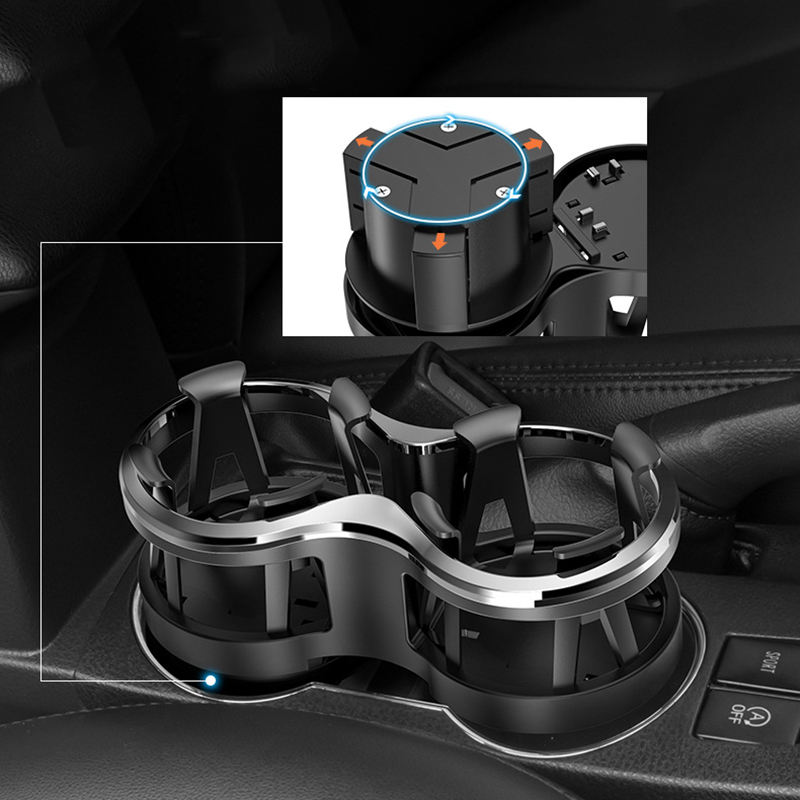
Performance Comparison of Ordinary Die Castings & Precision Aluminum Alloy Die Castings
| Performance Index | Ordinary Aluminum Die Castings | High-Precision Aluminum Alloy Die Castings |
|---|---|---|
| Internal Defect Rate | High porosity & shrinkage cavity rate | Ultra-low microscopic defect rate |
| Dimensional Tolerance | ±0.15mm and above | ±0.02–0.05mm stable control |
| Surface Finish | Rough, obvious parting lines & burrs | Smooth surface, less burr treatment |
| Pressure Resistance & Sealing | Poor, easy to leak after long use | Stable sealing, high pressure resistance |
| Material Service Life | Short, easy to deform & crack | Long durable, anti-fatigue & anti-deformation |
| Post-processing Cost | High repeated processing cost | Low cost, few finishing procedures |
In practical industrial application scenarios, aluminum alloy die casting parts are widely used in automobile chassis accessories, new energy equipment housings, intelligent robot structural parts, communication device shells, electromechanical supporting components and hardware precision accessories. Different industries put forward differentiated requirements for shock resistance, lightweight, corrosion resistance and assembly precision. Blindly selecting unified standard castings cannot match actual equipment parameters, resulting in mismatched performance and unnecessary economic losses. Custom customized die casting services can fully adapt to drawing parameters, special size requirements and special working condition performance indicators.
Lightweight advantage of aluminum alloy also brings irreplaceable value to modern energy-saving equipment. Compared with iron castings and steel parts, aluminum die castings have lower density, effectively reduce overall equipment weight, lower energy consumption during operation, and improve flexible operation performance of mechanical equipment. At the same time, aluminum alloy has excellent heat dissipation performance, which can avoid overheating failure of internal parts caused by long-time high-speed operation, protecting core electrical and mechanical structures inside equipment safely and stably.
Long-term batch supply stability is another key hidden demand ignored by most purchasers. Small-scale workshops have unstable mold accuracy, uneven batch quality and frequent delivery delays, which disrupt the overall production plan of downstream factories. Formal large-scale die casting enterprises have complete mold development, mass production, quality inspection and after-sales system. Each batch of finished products undergoes strict dimensional detection, airtightness testing, hardness testing and appearance inspection, ensuring consistent quality of bulk goods and continuous stable supply capacity.
To sum up, selecting aluminum alloy die casting parts should not only focus on immediate unit price, but comprehensively judge internal material quality, process precision, defect control, scenario adaptability and supply stability. Solving deep-seated hidden problems such as internal casting defects, matching deviation, insufficient durability and high follow-up cost is the core value of choosing professional precision die casting products. Reasonable selection of qualified customized aluminum die castings can comprehensively reduce comprehensive production cost, improve operation stability of finished equipment and enhance long-term market competitiveness of enterprise products.